
State of SEO & GEO in 2026: In-Depth Data from Latest Reports
It’s March 2026 and if you’re still measuring SEO success purely by blue-link position and monthly organic clicks, you’re already playing yesterday’s game. I’ve been watching this shift happen in real time, watching position-one traffic evaporate 58–61% the moment an AI Overview appears, watching teams quietly pivot budgets toward citation tracking instead of keyword rankings, and watching the most forward-thinking SEOs start treating ChatGPT, Gemini and Perplexity as primary search surfaces rather than side experiments.
This isn’t speculation. It’s what 371 working SEO professionals across 52 countries told Search Engine Journal in their 2026 survey, what Semrush, BrightEdge and Seer’s clickstream data is showing every month, and what the explosive GEO market forecasts are screaming from every research deck. The numbers don’t lie, zero-click is becoming the new normal, AI referrals are growing 527% year-over-year, and the next wave of visibility won’t come from outranking competitors on page one; it will come from being the trusted source the AI chooses to answer with.
Traditional SEO Landscape in 2026
As of March 2026, traditional blue-link SEO remains a core driver of traffic for many sites, but the environment has shifted dramatically due to AI integration and changing user behavior. The most authoritative industry reports confirm a continued decline in clicked organic results and increased reliance on SERP features.
- Zero-click searches dominate: Approximately 60% of Google searches now end without any click to an external website in broader tracked contexts, with rates significantly higher when AI Overviews or other SERP features appear. Non-AI queries stabilized around the low-20% zero-click range by late 2025, but overall click volume continues to erode.
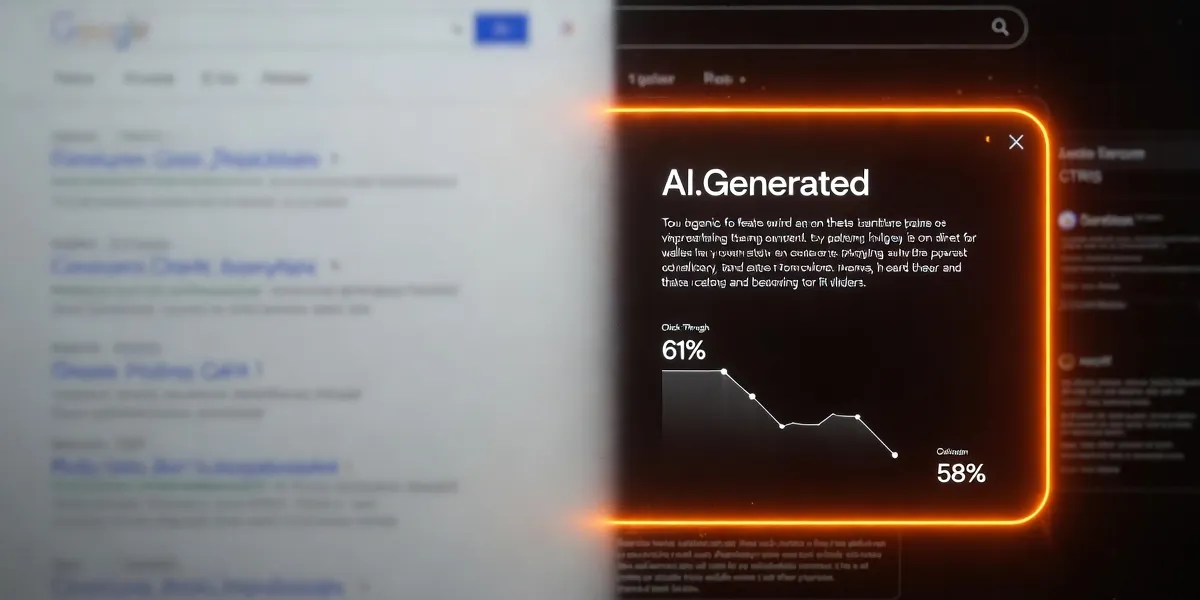
- Organic CTR impact from AI Overviews: When Google AI Overviews are triggered, organic click-through rate for the #1 position drops by approximately 58–61% according to large-scale panel data. Being cited as a source inside an AI Overview improves organic CTR to ~1.08% vs baseline 0.6%.
- Search volume and behavior shifts: Google desktop searches per U.S. user declined nearly 20% year-over-year (Q4 2025 data carrying into 2026). Google retains ~90.48% market share, but AI alternatives reduce repeat searches and direct visits.
- Core ranking factors holding strong: Original, human-first content remains the #1 positive-ranking activity (66.3% of surveyed professionals), followed closely by technical improvements, content updates, and E-E-A-T signals. 49.6% of pros increased E-E-A-T investments amid ongoing volatility, and 56.6% report no reduction in SEO budgets.
Bottom line: Classic SEO still delivers the majority of remaining clicks when visibility is achieved, but total click volume is shrinking. Winners are shifting focus toward multi-channel visibility (impressions, brand mentions, AI citations) rather than clicks alone.
Source: Search Engine Journal State of SEO 2026 Report (371 pros, 52 countries)
•
Semrush Zero-Click Searches Study (updated 2026 data)
Key Challenges and Priorities from 2026 Surveys
The SEO landscape is defined by volatility and adaptation. Surveys of working professionals reveal the biggest pain points and where the smartest teams are investing time and budget right now.
- Algorithm and SERP volatility is the #1 challenge: 59.3% of surveyed SEO professionals named ongoing algorithm changes and unpredictable SERP feature appearances as their single biggest hurdle in 2026. This has pushed many teams back to fundamentals: structured data implementation, Core Web Vitals optimization, and content freshness checks.
- Breaking content silos and adopting hybrid workflows: Teams are struggling to coordinate content across departments, with 42.3% identifying general AI writing assistants as the most critical tool for success. At the same time, 58.5% plan to maintain or increase hybrid human-AI content creation processes rather than going full AI or full manual.
- High ROI from AI tools reported by most: Nearly 70% of businesses say AI-powered SEO tools (content generation, keyword research, technical audits) deliver higher ROI than traditional methods alone. This is driving budget stability — 56.6% of respondents report no reduction in SEO spend, with many increasing investment in AI-assisted workflows.
- Search Everywhere Optimization becomes essential: Professionals increasingly view visibility beyond Google as critical, social discovery feeds, video platforms, forums, and standalone AI engines. This shift demands multi-channel strategies and tracking of brand mentions/impressions outside traditional SERPs.
- Content that AI can't easily replicate wins: First-hand experience, opinionated analysis, and unique data outperform generic or fully AI-generated material. Brand signals (off-site mentions, PR, social) now influence rankings and AI citations more than ever.
Key takeaway from surveys: The winners aren't fighting AI, they're using it strategically while doubling down on human expertise, technical excellence, and multi-platform visibility.
Source: Search Engine Journal State of SEO 2026 Report (371 professionals, 52 countries)
•
Semrush AI in SEO Statistics 2026
The Rise of AI Search Engines and GEO as the Next Frontier
AI-driven search is no longer a side experiment: It is becoming the dominant interface. Google AI Overviews already appear in a massive share of queries, while standalone generative engines are growing at unprecedented rates. The new discipline of Generative Engine Optimization (GEO) focuses on earning citations inside AI-generated answers rather than traditional rankings.
- Explosive growth in AI referral traffic: AI and large language model (LLM) referral traffic to tracked websites surged dramatically year-over-year, with retail verticals seeing particularly steep increases by mid-2025 that carried strongly into 2026.
-
GEO market projections show massive expansion: The global Generative Engine Optimization market is valued at approximately USD 1,089.3 million in 2026 and is projected to grow at a 40.6% CAGR, reaching USD 17,148.6 million by 2034 (alternative forecasts place 2026 at USD 1.48 billion growing to USD 17.02 billion at 45.5% CAGR).
Source: Dimension Market Research GEO Market Report - AI citation advantage over traditional rankings: Fewer than 10% of sources cited in AI-generated answers match the top-10 Google organic results. Brands appearing in AI Overviews see significantly higher organic and paid CTR compared to baseline. AI agents now account for a substantial share of organic site activity in enterprise tracking.
- Platform adoption and reach in early 2026: Major generative engines are rapidly becoming primary search interfaces for many users, with ChatGPT, Gemini, and Perplexity seeing massive monthly active user growth.
-
GEO vs. traditional SEO divergence: Optimizing for AI citation requires different tactics: conversational phrasing, structured factual answers, strong entity authority, and schema markup — often independent of blue-link position. Dual optimization (classic SEO + GEO) is now essential for future-proof visibility.
Source: Semrush GEO Guide & Statistics
Core insight for 2026: Traditional rankings still matter, but AI visibility determines reach for a growing percentage of queries. Brands that master GEO — earning trusted citations in generative answers — gain a significant edge in traffic, conversions, and brand authority.
Data-Backed Strategies for 2026 Success
The 2026 data points to clear, high-ROI actions that combine traditional SEO foundations with AI-era tactics. These strategies are prioritized by top-performing teams in the latest surveys and deliver measurable visibility across both classic and generative search.
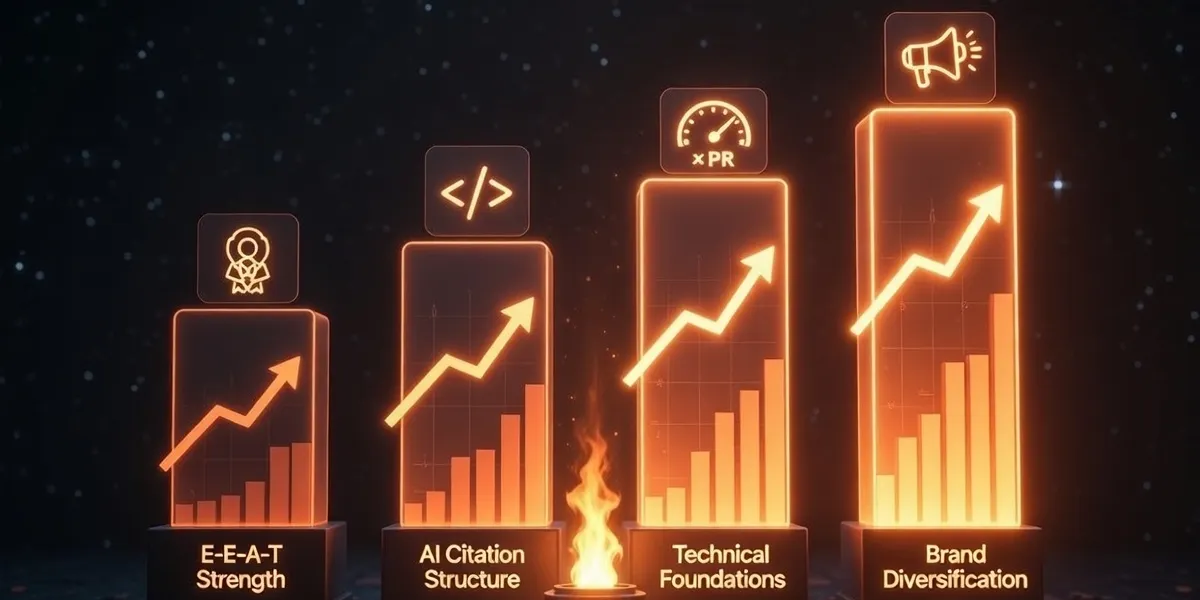
-
Strengthen E-E-A-T signals across every page
Author bios with real credentials, first-hand experience examples, original data/research, and cited sources remain non-negotiable. 49.6% of pros increased E-E-A-T focus, and content with strong signals ranks higher in both Google and AI citations. -
Optimize content structure for AI citation
Use clear H2/H3 headings, concise factual paragraphs, conversational phrasing, and comprehensive schema markup (FAQ, HowTo, Article, etc.). These tactics help AI engines extract and cite your content accurately, even when traditional CTR is low. -
Maintain rock-solid technical foundations
Core Web Vitals (LCP <2.5s, CLS <0.1, INP <200ms), mobile-first indexing, crawlability, and accurate structured data are still direct ranking factors and help AI engines understand/parse your site reliably. Technical excellence underpins both traditional and generative visibility. -
Diversify visibility and build brand resilience
Track impressions, brand mentions, and AI citations beyond clicks. Invest in PR, social proof, off-site reputation, and owned channels (email lists, communities). This protects against zero-click dominance and algorithm shifts.
2026 reality: Fundamentals endure, but the game is now visibility everywhere: Blue links, AI answers, social discovery, and brand authority. Measure multi-channel performance regularly and adapt fast. The tools menu has instant audits to benchmark your site against these exact priorities.
Source: Search Engine Journal State of SEO 2026 Report
Final Thoughts - Where We Actually Stand in March 2026
Looking back at the data we’ve covered, one thing is painfully clear: 2026 isn’t the death of SEO. It’s the death of lazy SEO. The fundamentals (fast pages, real expertise, structured data, brand signals) haven’t gone anywhere; they’ve just become table stakes for both traditional rankings and AI citations. What’s new is the urgency: every month you delay building multi-channel visibility and GEO hygiene, another chunk of potential traffic disappears into zero-click summaries or competitor citations.
The good news? The gap between the winners and everyone else is still bridgeable. The teams that are already measuring AI impressions, testing conversational phrasing, refreshing author bios, and treating PR/social as ranking fuel are seeing stability, even growth while others watch dashboards bleed. It’s not about abandoning what worked before; it’s about layering the next layer on top before the old layer collapses.
So clicks are scarcer, answers are instant, and the next frontier isn’t a new algorithm update. It’s earning the right to be the answer itself. Measure early, adapt fast, and keep the torch lit. The game hasn’t ended; it’s just changed shape.
How Websites Can Make Money When AI Scrapes & Answers for Free
2026 reality: ~60%+ of searches now end zero-click. AI Overviews/ChatGPT/Perplexity/Gemini give answers without sending traffic. Traditional ads, affiliate lists, and roundup posts are collapsing. But smart sites are thriving with models AI can’t fully replace.
1. Sell what AI can’t replicate at scale
- Premium tools / SaaS / dashboards: Personalized audits, gap analysis, AI fix scripts, rank forecasting, backlink finders. People pay for real-time, site-specific value that saves hours.
- Private/gated data & research: Proprietary studies, clickstream insights, niche SERP histories, custom benchmarks. AI summarizes public info – not your private trends.
- Done-for-you services: Audits + fixes, strategy calls, migrations. High-stakes work still needs human trust.
2. Build owned audiences & direct relationships
Zero-click forces publishers to channels they control:
- Email newsletters (Substack, Beehiiv, ConvertKit): Subscriptions or sponsorships. AI doesn’t have your list.
- Paid communities/memberships (Circle, Discord, Patreon): Exclusive Q&A, early tools, private data, live sessions.
- Branded courses/workshops: Training on GEO, Core Web Vitals fixes, migrations.
2026 rule: If AI can consume the value in one answer → it’s probably not sustainable. If it needs ongoing relationship, personalization or execution → it’s resilient.
3. Capture high-intent commercial traffic
AI is weakest on transactional/local queries - these still send clicks:
- E-commerce product pages (schema, reviews, fast checkout).
- Local service sites (strong Google Business Profile + reviews).
- Real-time comparison/deal sites.
- High-ticket lead-gen forms (consulting, demos, audits).
4. Become the source AI must cite (and monetize it)
- Licensing deals: Some publishers already license content to AI companies.
- Citation + traffic upside: Brands in AI answers see 35%+ higher organic CTR and 91% higher paid CTR.
- GEO consulting/tools: Agencies helping clients get cited are in high demand.
Quick reality check - dying vs thriving
| Getting crushed | Surviving / growing |
|---|---|
| Ad-heavy informational articles. | Premium SaaS tools & dashboards. |
| Generic “best X” listicles. | Email newsletters & memberships. |
| Low-value affiliate roundups. | High-ticket lead-gen & services. |
Bottom line March 2026
AI took the easy informational middle, but it created huge demand for tools, expertise, relationships, real-time data, execution help, and transactional intent. Winners moved up-market or built moats AI can’t cross.
See How Traffic Torch Helps You AdaptFrequently Asked Questions – State of SEO & GEO 2026
Is traditional SEO dead in 2026? ▼
No. Traditional rankings still drive the majority of remaining clicks, but zero-click searches now dominate (~60% overall). AI Overviews reduce position-1 CTR by 58–61%. Focus has shifted from pure ranking to multi-channel visibility and citations.
What is Generative Engine Optimization (GEO) and how is it different from SEO? ▼
GEO is the practice of structuring content so AI engines (ChatGPT, Gemini, Perplexity, Google AI Overviews) cite your brand in their answers. Unlike traditional SEO (which optimizes for blue-link rankings), GEO optimizes for being chosen as the trusted source in conversational results. The GEO market is already valued at ~USD 1.09 billion in 2026 and growing 40–45% CAGR.
How much are AI Overviews actually reducing organic traffic? ▼
When an AI Overview appears, organic CTR for position 1 drops 58–61% and paid CTR drops 68%. Overall zero-click searches sit around 60%. However, brands cited inside AI Overviews see +35% organic CTR and +91% paid CTR compared to non-cited sites.
How do I get my content cited in AI Overviews and ChatGPT answers? ▼
Use clear H2/H3 structure, conversational answers, strong E-E-A-T signals (author bios, original data), schema markup, and verifiable sources. Focus on first-hand experience content that AI cannot replicate. Fewer than 10% of AI citations match traditional top-10 Google results — position alone no longer guarantees visibility.
How important is E-E-A-T in 2026? ▼
Extremely. 49.6% of pros increased E-E-A-T investment this year. Original human-first content is still the #1 positive ranking factor (66.3% of SEJ survey respondents). AI engines heavily favour authoritative, experience-backed sources for citations.
Should I still focus on Core Web Vitals and technical SEO? ▼
Yes — they remain direct ranking factors and help AI engines parse and trust your content. Mobile speed, low CLS, and structured data are foundational for both traditional rankings and generative citations.
How do I measure SEO success in the zero-click / AI era? ▼
Shift from clicks to impressions + brand mentions + AI citation share. Track AI referral traffic (up 527% YoY), branded search volume, and visibility in AI answers. Tools that audit both traditional and generative visibility are now essential.