
Keyword Optimizer Tool
SEO audit tool: Enter any URL and target keywords for analysis.
Daily Limit Reached
You've used all your audits today. Upgrade to Pro USD $48 per year for 25 daily SEO, UX & GEO analysis runs. Secure Stripe Checkout
Upgrade to ProFrequently Asked Questions about On-Page Keyword SEO
What is Meta Title & Description in SEO? ▼
What is H1 & Headings optimization? ▼
What is Content Density in SEO? ▼
What is Image Alt Text for SEO & Accessibility? ▼
What is Anchor Text in internal linking? ▼
What is URL & Schema in on-page SEO? ▼
How the Keyword Checker Works? ↓
Instant On-Page Keyword Audit Tool
This free on-page SEO checker and keyword optimizer scores any webpage against your target keyword and delivers a comprehensive report instantly.
All analysis runs client-side via a secure CORS proxy. Your data remains fully private. Nothing is stored, logged, or transmitted to servers.
What Our SEO Analysis Tool Evaluates
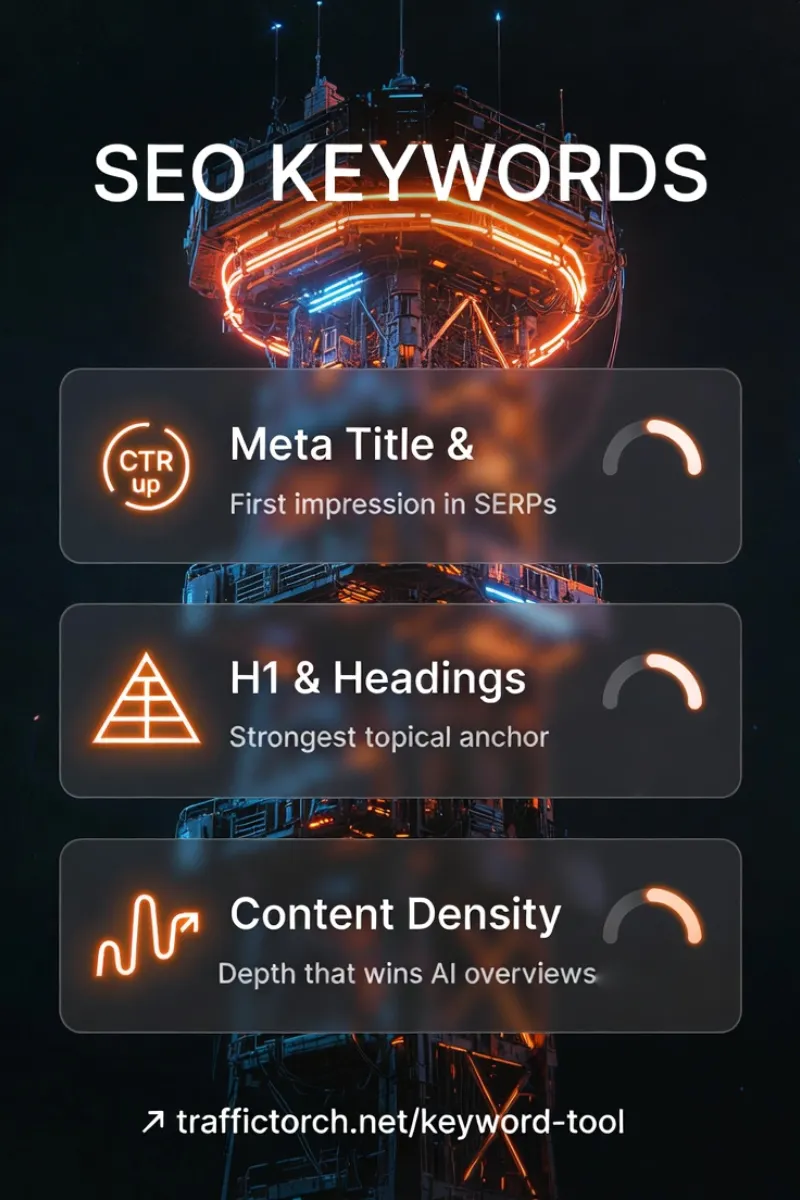
- Meta Title & Description — keyword placement, optimal length, uniqueness, and CTR appeal.
- H1–H6 Headings & Content — relevance, density, topical depth, and E-E-A-T signals.
- URL Structure — keyword inclusion, readability, and canonical tags.
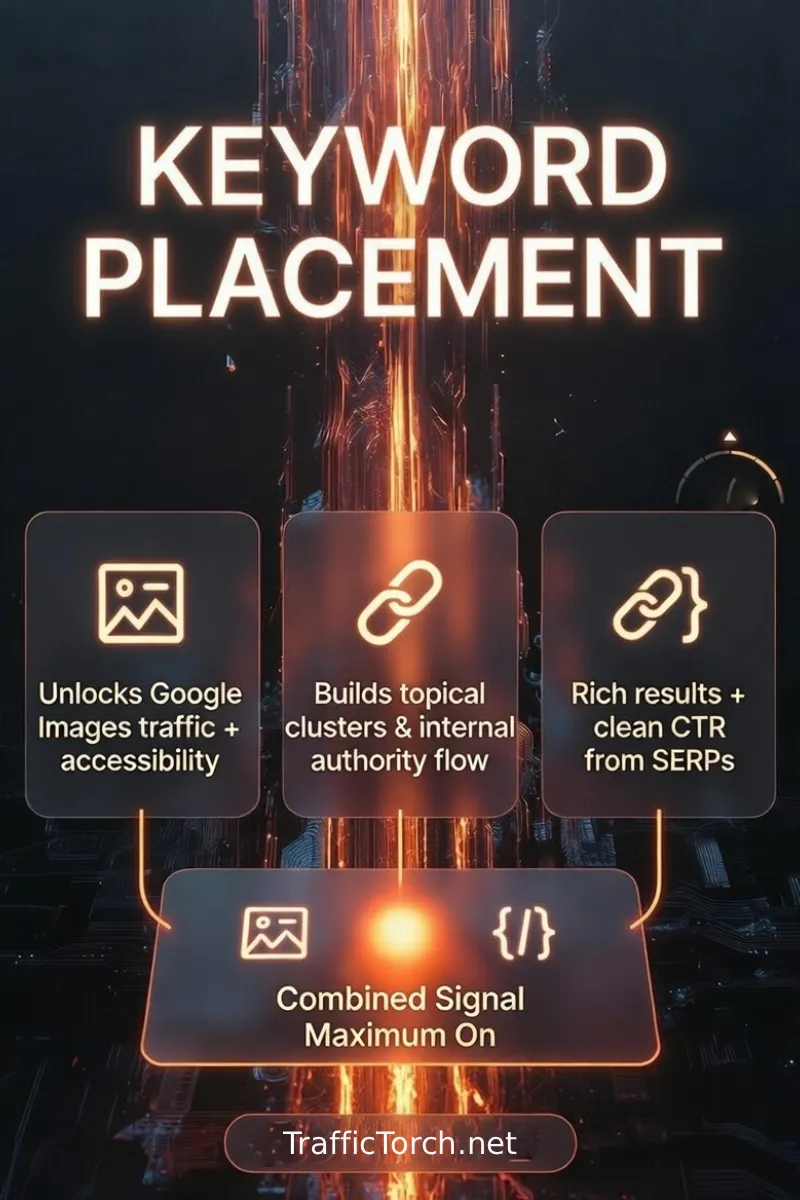
- Image Alt Tags & Anchors — descriptive text, accessibility, and internal relevance.
- Structured Data (Schema) — valid markup detection and rich snippet opportunities.
- Internal & External Linking — anchor optimization, depth, and quality signals.
Get a visual SEO Score with gauges, deep-dive modules, prioritized fixes ranked by impact, and predictive ranking forecasts.
Fully mobile-friendly with dark/light modes. Actionable, educational insights to elevate rankings and UX quickly.
Key Insight
On-page optimization is the core factor you control. Master these elements with our free tool to build stronger relevance and drive sustainable traffic growth.
Deep Dive into Key Modules
What is a Modern Keyword Strategy?
Modern keyword strategy means selecting, grouping, and targeting terms that actually drive qualified traffic. While perfectly aligning with user intent, business goals, and current search behavior.
Most sites still hunt high-volume keywords: chase vanity metrics, force-fit terms, write generic content around them.
Today that produces low-quality traffic, high bounce rates, and fragile rankings that vanish on every update.
Real keyword success now depends on these interconnected principles:
- → True user intent & SERP understanding.
- → Commercial value & conversion potential.
- → Topic clusters & semantic depth.
- → Realistic competitiveness & opportunity scoring.
Traffic Torch Keyword Tool instantly analyzes any keyword or seed → scores opportunity → groups semantically → shows intent type, difficulty, value, and gaps.
6 High-Impact Moves to Master Keyword Strategy
Study top 10 SERP — classify informational, commercial, transactional, local. Then build content that matches exactly.
Score keywords by real business potential (not just volume). Focus on terms that drive leads, sales, or qualified traffic.
Group related terms semantically. Create pillar + cluster content structure that signals topical authority to Google.
Combine keyword difficulty, SERP features, domain strength, and intent match, Target winnable, high-value terms first.
Prioritize keywords that reward recent content. Catch rising queries early and refresh core pages regularly.
Find terms competitors rank for that you miss. Especially long-tail and question-based search queries.
Old Keyword Hunting vs Modern Keyword Mastery
| Factor | Old-School Keyword Hunting | Modern Keyword Mastery Focus |
|---|---|---|
| Primary Goal: | Rank for highest volume keywords. | Drive qualified, converting traffic. |
| Selection Criteria: | High search volume, low difficulty. | Intent match + commercial value + realistic win probability. |
| Content Approach: | One page per keyword. | Topic clusters + semantic depth + pillar content. |
| Optimization Focus: | Exact-match phrases & density. | User-first answers + conversational natural language. |
| Competitive Analysis: | Mostly Keyword difficulty score. | SERP features, content gaps, intent alignment, freshness. |
| Future-Proofing: | Vulnerable to algorithm shifts. | Intent + value + topical authority = resilient traffic. |
Modern keyword strategy isn’t about ranking for everything. It’s about ranking for the right search queries that actually grow your business.
SEO Tools
SEO Keyword Checklist 🗝️ ↓
Keyword SEO Practices: What to Do & What to Avoid?
✅ Best Practices to Implement
- Place primary keyword naturally in title, H1, and first paragraph.
- Use descriptive, keyword-relevant alt text for all images.
- Create compelling meta descriptions with emotional hooks and calls-to-action.
- Structure content with logical heading hierarchy (one H1, multiple H2/H3).
- Include internal links with descriptive anchor text to related pages.
- Add relevant schema markup to enable rich snippets.
- Optimize for Core Web Vitals: fast loading, mobile-friendly design.
❌ Common Mistakes to Avoid
- Keyword stuffing or unnatural repetition.
- Duplicate or missing title tags and meta descriptions.
- Images without alt text or with generic filenames.
- Long paragraphs without subheadings or scannable formatting.
- Broken internal links or irrelevant external links.
- Blocking important content with noindex or robots.txt errors.
- Slow page speed due to unoptimized assets.
✅ Best Practices to Implement
- Place primary keyword naturally in title, H1, and first paragraph.
- Use descriptive, keyword-relevant alt text for all images.
- Create compelling meta descriptions with emotional hooks and calls-to-action.
- Structure content with logical heading hierarchy (one H1, multiple H2/H3).
- Include internal links with descriptive anchor text to related pages.
- Add relevant schema markup to enable rich snippets.
- Optimize for Core Web Vitals: fast loading, mobile-friendly design.
❌ Common Mistakes to Avoid
- Keyword stuffing or unnatural repetition.
- Duplicate or missing title tags and meta descriptions.
- Images without alt text or with generic filenames.
- Long paragraphs without subheadings or scannable formatting.
- Broken internal links or irrelevant external links.
- Blocking important content with noindex or robots.txt errors.
- Slow page speed due to unoptimized assets.
Following these guidelines helps search engines understand and trust your content while delivering superior user experience.
🗝️ Title, Meta & Core Optimization
🔑 Keyword Optimization & Content Structure
🖼️ Images, Schema & Linking
📊 Overall Score & Actionable Insights
Master this free on-page SEO checklist with our instant audit tool. Unlock fixes and boost your search performance.
Why Keyword Optimization Matters? ↓
On-Page Is Your Core Ranking Foundation
Search engines prioritize pages that clearly demonstrate relevance, authority, and user value through on-page elements.
Excelling in on-page SEO directly boosts visibility, engagement, and sustained organic performance.
Proven Real-World Benefits
Keyword-optimized titles and metas drive significantly better CTR in search results.
Strong relevance signals elevate positions in competitive SERPs.
Valid schema unlocks rich snippets and featured elements.
Structured, accessible content reduces bounce rates and increases engagement.
The Bottom Line
While external factors vary, you fully control on-page excellence, optimize it to gain a lasting edge.
Use our on-page SEO checker to audit, refine, and grow your traffic confidently.
Perfect on-page → Top organic search results.

Traffic Torch
Dedicated to Precision On-Page Keyword Optimization.
This Keyword On-Page SEO Audit Tool distills years of correlation research and real-world testing into a fast, accurate diagnostic that reveals hidden optimization gaps in seconds.

Ylia Callan – Lead Developer
Musician • Author • Researcher • Web Designer • TAFE NSW • Creator of privacy-first SEO, GEO & UX web tools. Bridging creativity, consciousness exploration, and modern technology to build meaningful, performant, and user-centric experiences.
Explore my work - books on physics, philosophy, consciousness, music, and more – at yliacallan.github.io.
Modern Stack Setup
Traffic Torch runs on epic, scalable infrastructure: Hosted via GitHub Pages for blazing-fast static delivery and effortless updates. Protected and accelerated globally by Cloudflare with edge CDN, security, and performance optimizations.
Informed by ongoing analysis of search algorithm updates, ranking factor studies, and performance data from hundreds of optimized pages.
Published: 2025-12-21
Last updated: 2026-03-06